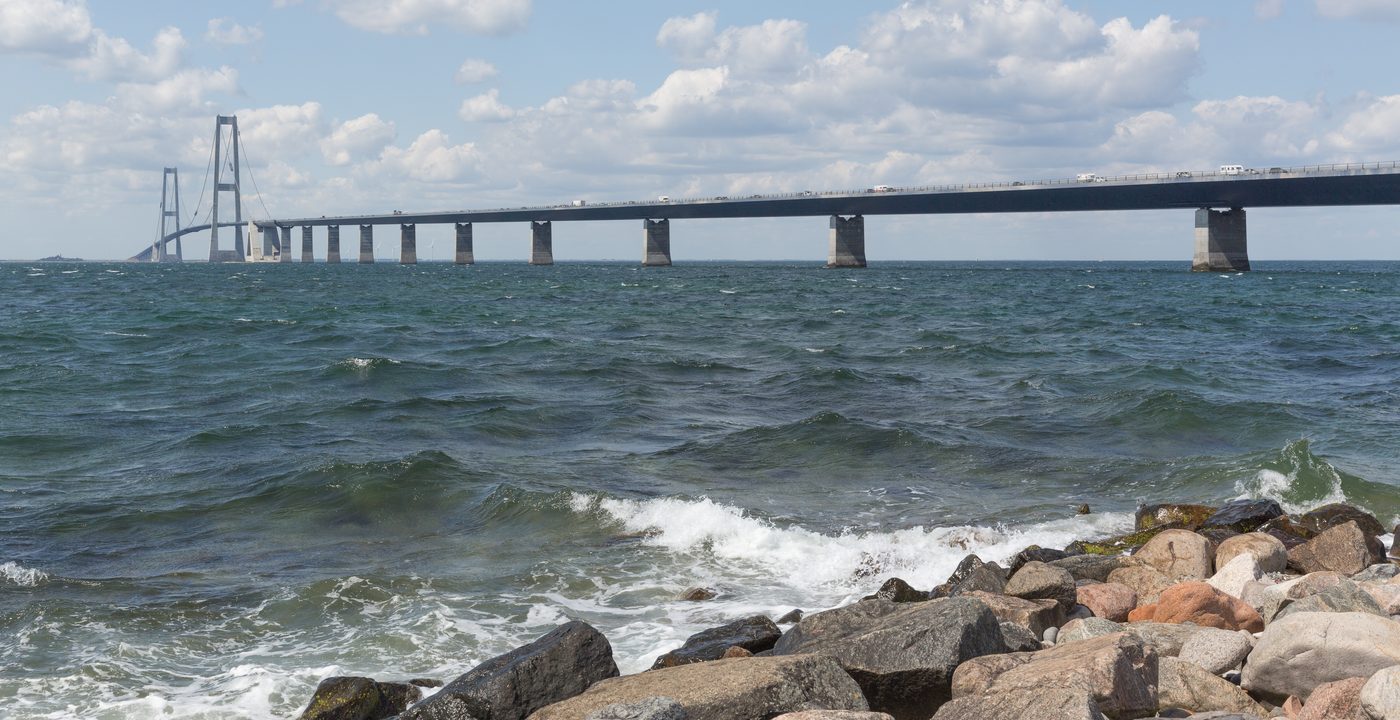
Storebælt high bridge at dusk — the first 18 km of every Copenhagen-to-Adriatic Tesla trip
Cornerstone · Croatia road trip

Tesla to Croatia — the route we have driven for the past 4+ years

~1,900 km, 2 days, four countries. The eastern route via Regensburg and Slovenia — what Tesla mapping picks for this trip, and what years of doing it have taught us.

By Blazenka & Bo Last updated 2026-05-24 12 min read
Scroll
B

Bo

A Danish-Croatian household. Bo drives a Tesla (since 2023; before that, a Mercedes — diesel then petrol). Blazenka is Croatian, from inland Croatia; she lived in Zagreb for years and has travelled to the coast nearly all her life. Together we have driven down to the coast for the past 4+ years.

"German autobahn is fine. Slovenia is where you actually start to relax."

Updated 2026-05-24 · Prices checked 2026-05-24

We have driven Copenhagen to the Adriatic in our Tesla for the past 4+ years. About 1900 km via the Storebælt bridge, Jutland and Germany. We do it in 2 days — it is the Supercharger stops that make it bearable. We never take the ferry, and we never drive the Sweden route.

~1,900 km
Copenhagen → Zadar
2 days
1 overnight
4 countries
DK · DE · AT · SI · HR
~50 km
Max to a Supercharger
01 · TL;DR

The short version

The route runs Copenhagen → Storebælt → Jutland → Padborg border → Hamburg → Würzburg → Regensburg (overnight) → Passau → Salzburg → Slovenia → Zagreb → Zadar. About 1900 km if you aim for Zadar in northern Dalmatia. With Superchargers every 200-300 km the breaks happen on their own. Our typical rhythm: 12-13 hours on day 1 ending around Regensburg, then 6-8 hours on day 2 down to the coast. Day 1 is long on the clock but not long behind the wheel — there is a difference, and it is the whole reason the trip works.

Day1

Copenhagen → Regensburg

Storebælt bridge, Jutland, Padborg border, German autobahn — Superchargers set the pace. Overnight in the UNESCO-listed medieval city.

~1,050 km · 12-13 hrs
Day2

Regensburg → Zadar

Passau, Salzburg, Slovenia's green corridor, the Maslenica drop to the Adriatic — the moment the holiday begins.

~870 km · 6-8 hrs
02 · The route

The route — leg by leg

We do not drive the Brenner pass. We take the eastern route via Regensburg, Passau, Salzburg and Slovenia — it has the densest Supercharger coverage and the most flexible overnight options.

LegDistanceDriving timeBreaks
Copenhagen → Padborg (DK-DE border)~320 km~3.5 hrs1 Supercharger + Storebælt bridge stop
Padborg → Hamburg → Würzburg~520 km~5 hrs2 Superchargers + lunch
Würzburg → Regensburg (overnight)~220 km~2.5 hrs1 Supercharger + dinner
Regensburg → Salzburg/Slovenia~430 km~4.5 hrs1-2 Superchargers + lunch
Slovenia → Zadar (Croatia)~410 km~4.5 hrs1 Supercharger + dinner break

Total: about 1900 km, around 20 hours of pure driving. We normally do day 1 = 12-13 hours (~1050 km to Regensburg) and day 2 = the rest (~870 km to Zadar).

The Padborg border stop

We almost always pull in at the Fakta supermarket in Harrislee, the first town south of the German border. Classic Danish-German cross-border shop — soft drinks, beer, snacks at meaningfully lower German prices. It has become part of the rhythm. For anyone heading south from Denmark it is worth ten minutes.

A row of Tesla Superchargers at a German service area in winter light
A German V3 site. You will see a dozen of these between Hamburg and Salzburg, and you will be grateful for every one.
03 · The pace

Our actual driving rhythm

The breaks make the difference. 12-13 hours on day 1 is NOT 12 hours behind the wheel — it is 8-9 hours of actual driving spread across Supercharger stops every 200-300 km.

That is the most important mental shift for anyone new to long-distance EV driving: the Supercharger breaks are part of the pace, not an obstacle to it. If you plan as though they are NOT breaks, you will arrive exhausted. If you plan as though they ARE breaks (and they are), you arrive relaxed even after 13 hours on the road.

German autobahn is fine. But Slovenia is where you actually start to relax — the autobahn ends, the Alps soften into hills, and you can feel the holiday begin before you have even hit the coast. Bo

Our rhythm looks like this:

04 · Charging

Superchargers en route — 2026 status

The short version: you are never more than about 50 km from a Supercharger on this route. Tesla has built out density across all four countries in recent years.

Germany

Germany has Europe's densest Supercharger network. On this route you pass, among others, Hamburg (Stillhorn), Hannover, Kassel, Würzburg, Nürnberg and München. The majority are V3 (250 kW) or faster V4 sites. Prices in 2026 sit in the region of 0.40-0.50 EUR/kWh — verify in the Tesla app, as Tesla now uses dynamic pricing that shifts with grid load.

Austria

Salzburg has a large Supercharger just outside the city, plus Spittal an der Drau if you take the Tauern tunnel route. Austrian prices are typically in the same range as German.

Slovenia

Maribor and Ljubljana both have Superchargers. Slovenia is surprisingly well covered for a small country — it sits on the through-route for all of western Europe's EV traffic heading to the Adriatic.

Croatia

Zagreb has multiple Superchargers, Karlovac has one beside the A1 motorway, and the coast has sites at Zadar, Šibenik, Split and further south. The A1 south to Dalmatia is the well-covered axis. The Karlovac site sits roughly midway between Zagreb and Plitvice.

!

Istria is the thin part of the network

If you are heading north toward Istria (Pula, Rovinj) you will NOT pass many Superchargers — plan for charging in Rijeka or use the Ionity CCS network. The motorway south to Dalmatia is the well-covered axis; the coastal road through inland Croatia is thinner.

The Maslenica bridge on the A1 motorway — the dramatic drop from the Velebit ridge to the Adriatic
Maslenica bridge. The Velebit ridge breaks, the A1 drops, and the Adriatic opens out. This is the moment the trip is suddenly over.
05 · Tolls

Vignettes and tolls

This is where people get expensive surprises. Sort them in the days before departure, not at the border crossing where kiosks charge a healthy markup.

CountrySystemPriceWhere to buy
GermanyNone for passenger cars0 EUR
AustriaDigital vignette~€12 (10 days)shop.asfinag.at
SloveniaE-vignette (DarsGo)~€16 (7 days)evinjeta.dars.si
CroatiaPay-per-km (motorway)~€12-17 Zagreb–SplitENC transponder or cash/card at toll gate

Prices are approximate and verified 2026-05-24. Official adjustments happen annually — check the official sites before your trip.

!

Two vignette traps

(1) Do NOT buy at petrol stations right before the border — they often add a 30-50% markup. Buy online the day before.

(2) Slovenia's e-vignette is plate-recognition. Buy it pointing at the correct number plate. If you have an old Croatian ENC transponder in the car, make sure it still works before the gate.

06 · Sleep

Where to sleep

We take one overnight, almost always around Regensburg — roughly 1050 km from Copenhagen, a near-perfect halfway point.

Search Regensburg hotels on Booking.com — filter on "EV charger". For an alternative midway point, search Salzburg hotels.

07 · Experience

Lessons learned over multiple years

This is what we have learned that does not appear in the Tesla forums.

  1. Plan-B Superchargers should already be in your head. An 8-stall site can have a queue in peak summer. Always know there is an alternative 50 km further on — and where it is.
  2. Climate control is free while Supercharging. Do not sit in a hot car — get out, walk around, get a coffee. Essentially free air conditioning, which matters for kids and dogs in August.
  3. Respecting German speed limits saves 15% energy. Drive 130 km/h (not 160) on the unlimited stretches. You earn it back in fewer charging stops and lower arrival fatigue.
  4. Watch the long tunnels between Slovenia and Croatia. Karavanke and others can have no mobile signal. Check the Tesla app for your next Supercharger BEFORE entering.
  5. Resist the "let's take the ferry from Italy" temptation. The Ancona/Bari overnight ferry looks elegant on a map but costs more, locks you to a departure slot, and you miss the Slovenia leg.

Build Plitvice into the descent

The A1 passes within 30 minutes of Plitvice Lakes. If you have any flexibility on day 2, leaving Regensburg early and finishing day 2 at Plitvice turns the trip into an actual holiday rather than just transport.

08 · The alternatives we skip

Why we DON'T take the ferry or the Sweden route

Two "clever" alternatives exist for the Tesla driver heading south from Scandinavia — we take neither.

The Rødby-Puttgarden ferry — doesn't work for us

The deeper take with numbers: bridge vs. ferry to Sweden — our choice on the way down.

The Sweden route via the Øresund bridge — no sense for car drivers

For a car traveller heading to Croatia it is 4-5 hours longer, more expensive (Øresund toll plus the Trelleborg ferry to Germany), and you miss the Slovenia leg entirely. The Sweden route only makes sense if you were already going to Sweden.

Alternative: rent a car in Croatia instead

If you do not own a Tesla but still want to drive yourself (recommended — public transport outside the major cities is sparse), fly to Zagreb or Split and rent a car there. We recommend Discover Cars as the aggregator — better cancellation terms than the smaller local firms. Also read: rental cars in Zagreb — the companies to avoid.

Storebælt high bridge at dusk
Sister site

The Denmark logistics layer

Tolls, Superchargers, ferries, speed cameras, parking apps — the practical Denmark layer of this exact trip is on our sister site.

Read on Road Trip Denmark

"Remember — you are on holiday."

Day 1 ends when you are tired, not when the spreadsheet says so. The Bavarian village 40 km before the planned stop is a better midpoint — every time.

09 · Questions

Frequently asked questions

About 1900 km from Copenhagen. We do it in 2 days — 12-13 hours on day 1 (Copenhagen to the Regensburg area in Germany) with plenty of breaks, then the remaining 6-8 hours on day 2 to the Adriatic. The many Superchargers en route turn charging stops into natural rest breaks. If you prefer shorter driving days, the same route stretches comfortably to 3-4 days with proper overnights in Hamburg, Würzburg, Salzburg or Ljubljana.
Yes. In 2026 Tesla Supercharger coverage is solid the whole way — Germany has the densest network in Europe, Austria and Slovenia are well covered, and Croatia has Superchargers along every main motorway. Range anxiety on this route is essentially a solved problem.
Germany: no vignette for passenger cars. Austria: digital vignette via shop.asfinag.at (around €12 for 10 days). Slovenia: e-vignette on evinjeta.dars.si (around €16 for 7 days). Croatia: no vignette — but you pay per kilometre on motorways via ENC transponder or cash/card at toll gates.
No, and you cannot. Tesla Superchargers work plug-and-charge — the car handles payment automatically. Do check the Tesla app before each stop to see occupancy (yellow or red means wait or skip to the next site 50 km on).
Tesla Roadside Assistance covers all of Europe — call the number from the Tesla app. There are Tesla service centres in Ljubljana and Zagreb. For minor issues, local mechanics can handle most things, since Teslas share many drivetrain and suspension parts with ordinary cars.
Often yes on a pure cost basis — flights plus a two-week rental usually undercut electricity, tolls, vignettes and overnights. But you lose flexibility, luggage space, and the drive itself, which is part of the holiday for us. We pick the Tesla because we want both the trip and the destination.
Two reasons. (1) Discounted "billigplads" tickets are rarely available in peak summer, and walk-up prices at the gate sit at €111+ per crossing — that eats most of the time saving. (2) Ferries have departure slots. We are a family — something always takes 30 minutes longer than planned. A missed ferry means waiting and a sour start. Storebælt bridge plus the Jutland route gives us full flexibility — we leave when we are ready. See bridge vs. ferry to Sweden for the full reasoning.
For a car traveller heading to Croatia it only makes sense if you were already going to Sweden (a Stockholm visit, for example). Otherwise it is 4-5 hours longer than the Storebælt-Jutland-Germany route, more expensive (Øresund bridge plus a ferry to Germany), and you miss the Slovenia leg, which is genuinely one of the nicer parts of the drive.