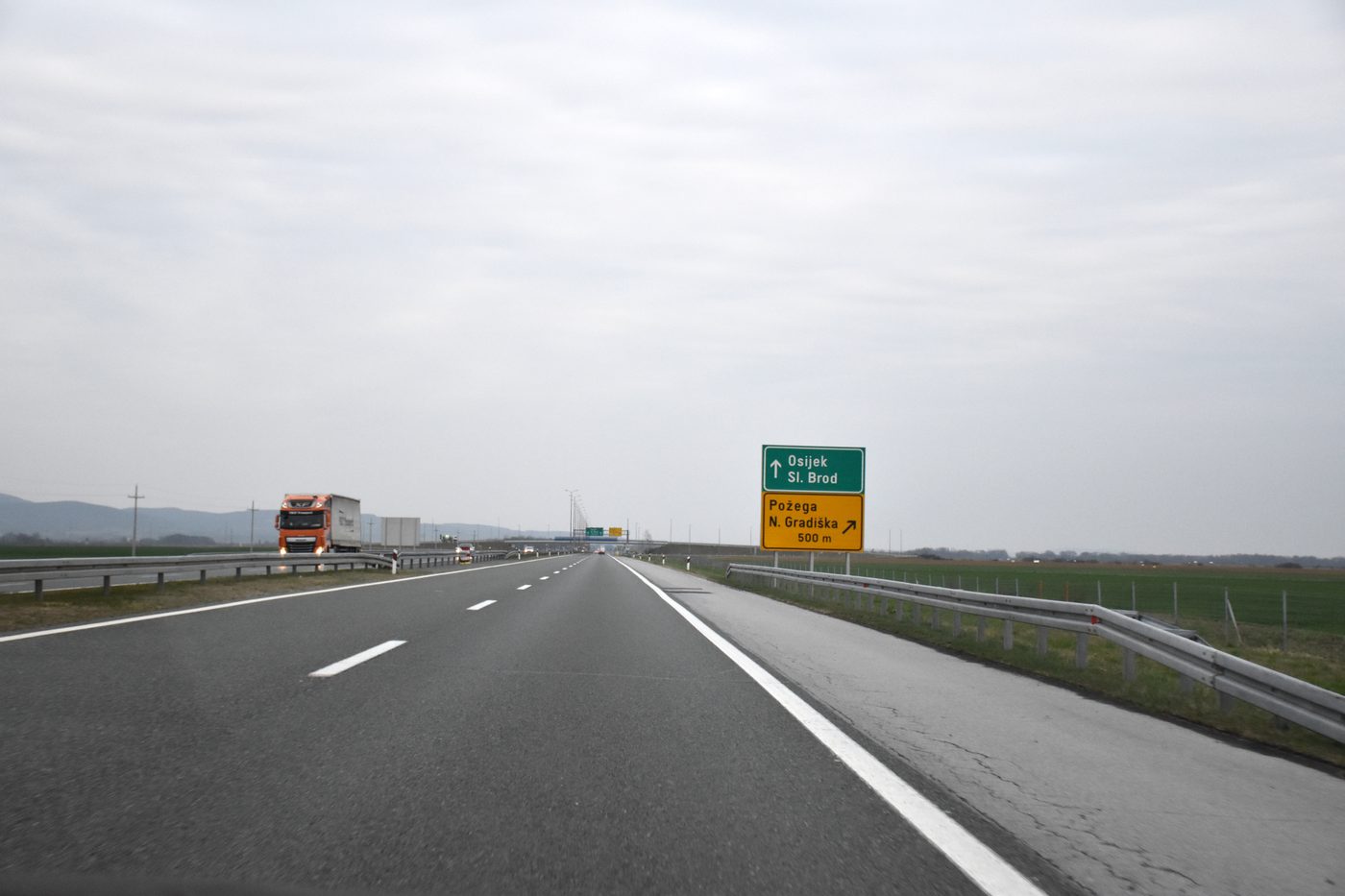
The damage scams, the fuel trap, the pressure upsell, the airport-vs-downtown trick — and why we rent in Italy or Slovenia and drive across the border instead.
Renting a car at Zagreb Airport looks cheaper on paper than most European capitals. Sometimes it is. Sometimes it is a setup. This guide is the warning we wish someone had handed us — written by a Croatian who knows the local rental landscape and a Dane who has picked up too many cars at ZAG. The scams are not unique to Croatia, but the combination — small operators, soft consumer protection, language friction at the counter — makes Zagreb one of the trickier airports in Europe to rent at.
If you skim nothing else on this page, read this.
That is the whole article. The rest is detail.
Most major European airports have 6-10 rental companies — all big international brands operating under franchise, all bound by global service standards.
Zagreb has those too, but it also has a long tail of small Croatian operators selling on price alone. They survive on the difference between their headline rate and the average customer's final bill. That difference is collected at the counter, at fuelling, and at return — and disputed weeks later by credit card statement.
The market is also less litigated. Consumer protection exists but moves slowly. The small operators know that 90% of foreign tourists will not chase a €400 damage charge across a border, in a language they do not speak, with no documentation. The math works in their favour.
If they walk around the car twice, you are already losing.Bo
What that means in practice: if the counter agent does the inspection at the speed of a normal customer hand-over, you are fine. If they walk it once, point to "minor existing damage", note nothing on the contract, hand you the keys and turn away — you are about to be charged for every one of those things on return. The defensive move is mechanical: walk the car yourself, video everything, get every existing scratch noted in writing before you drive off.

None of these are illegal in any clear-cut way — most live in the grey area between aggressive sales tactics and outright fraud. They all show up in Zagreb reviews more often than in Munich or Vienna.
The most common complaint. A tiny scratch on a bumper or wheel rim, not marked on the contract, becomes a €200-600 charge weeks after return. The fix is mechanical: walk the entire car, take date-stamped video of every panel, every wheel, the windscreen, the undercarriage if you can, and the interior. If you find anything, get it noted on the contract before you drive off. No exceptions.
If the agent points to "minor existing damage" and waves it off as "do not worry, it is noted", insist on seeing it noted on the paper contract you sign. If it is not on the paper, it is not noted. Take a photo of the signed contract before driving off.
Two flavours. The first is "prepaid fuel at our rate" — always 30-50% above market, never refundable. The second is "full at pickup, full at return — at our prices if not full" with their prices set at €3-4 per litre against the normal €1.50. Always refuse prepaid fuel, always fill up yourself within 5 km of the return office, always keep the receipt.
You arrive with full coverage already on the booking (or via your credit card). The agent insists their "premium" or "super" cover is mandatory because "your insurance does not cover X". Sometimes they imply they will not release the car otherwise. This is pressure, not policy. Bring printed proof of your existing cover. If they push hard, call the aggregator from the counter — the call alone usually ends the conversation.
The booked compact is mysteriously "unavailable" and the only option is an SUV at twice the daily rate. Sometimes genuine, often manufactured. Stand your ground: under aggregator T&Cs you are entitled to the booked category or a free upgrade — not a forced paid upgrade. Document the conversation, call the aggregator before signing anything.
A €1,500-2,500 hold goes on your card and "will be released within a few weeks". Sometimes it takes months. Use a credit card (not debit) with capacity to absorb the hold and a clear dispute process — never let a small operator block funds on your only card.
Some small Croatian operators refuse credit cards at the counter and insist on debit — because debit holds are harder to dispute. If your booking does not require a credit card and the operator says debit only on arrival, that is a flag. Walk away.
Some small operators advertise two locations: a cheap city-centre office and a more expensive airport desk.
This is rare with major brands. It is normal with the tiny operators. Rule of thumb: if the price difference between an operator's airport and city-centre offices is more than 15%, something is wrong. The airport concession fee is roughly that much. A bigger gap suggests the city office is bait.
This is what we now do most of the time. Three airports work well.
The rental markets in Italy and Slovenia are older, more competitive, and more transparent. The same booking through the same aggregator at Trieste vs Zagreb often comes out 20-30% cheaper for an equivalent car — before you even factor in the lower probability of scam charges. Plus you skip the Croatian cross-border fee in reverse: an Italian or Slovenian rental can usually enter Croatia free or near-free. Always confirm at booking that the rental allows Croatia.

Same car, same aggregator (Discover Cars), 7-day rental, shoulder season. Rough numbers — they fluctuate, but the relative pattern is stable.
| Airport | Country | Typical 7-day price (compact) | Scam risk | To Istrian coast | To Zagreb |
|---|---|---|---|---|---|
| Zagreb (ZAG) | Croatia | €280-360 | High (small operators) | ~3.5 h | 0 |
| Ljubljana (LJU) | Slovenia | €220-300 | Low | ~3 h | ~2 h |
| Trieste (TRS) | Italy | €190-260 | Low | ~2 h | ~5 h |
| Venice (VCE) | Italy | €200-280 | Low-medium | ~3-4 h | ~5-6 h |
Prices verified 2026-05-24. Always compare live via Discover Cars before booking.
For an Istria-focused trip (Pula, Rovinj, Opatija) Trieste wins on price and drive time. For a Zagreb-focused trip (city, Plitvice, inland) Ljubljana wins. For a Dalmatia-focused trip (Split, Hvar, Dubrovnik) flying directly to Split is usually right — and the same rental-market caveats apply, but with a slightly smaller bad-operator tail than Zagreb.
Sometimes the logistics force your hand. If you are flying into ZAG with no realistic alternative:
If you do all of the above, the major-brand rental at ZAG is usually fine. Not great, not stress-free, but fine. The horror stories almost all involve someone who skipped at least three of these steps.

The agent wants you out in 3 minutes. You will take 15. Set a standard that is hard to ignore.
If the agent says "we are very busy today, can you sign and we sort the details later" — do not sign. The whole point of this scam is that you sign in haste, find the damage in detail, but the signature is already on file. Take all the time you need. They will not refuse you the car for it.
Croatia is a five-border country and most road trips cross at least one.
Slovenia and Hungary are inside the EU/Schengen and usually free or a token fee. Bosnia & Herzegovina and Montenegro are outside the EU and require an explicit cross-border permission — typically €15-25 per day, often capped at €50-100 per rental. You must declare your intended countries at pickup; the agent issues a "green card" insurance extension and notes it on the contract. Driving across without declaring voids your insurance entirely. If you have an accident or even a minor breakdown in Bosnia with no declaration on file, you are liable for the full repair cost and any recovery back to Croatia.
Practical tip: book a supplier that allows Bosnia and Montenegro at pickup. Some of the cheapest local operators flatly refuse, which kills your itinerary on day one.
Our Tesla-to-Croatia guide is the full version of "skip the rental entirely". Charging map, route options, border tips, and the ferry-vs-bridge decision tree.
Read on"Remember — you are on holiday."
If the rental counter is making you doubt, walk away. The aggregator can rebook you. A delayed start beats a ruined holiday — and most damage invoices arrive after you are already home, when the trip is supposed to be a memory, not a fight.