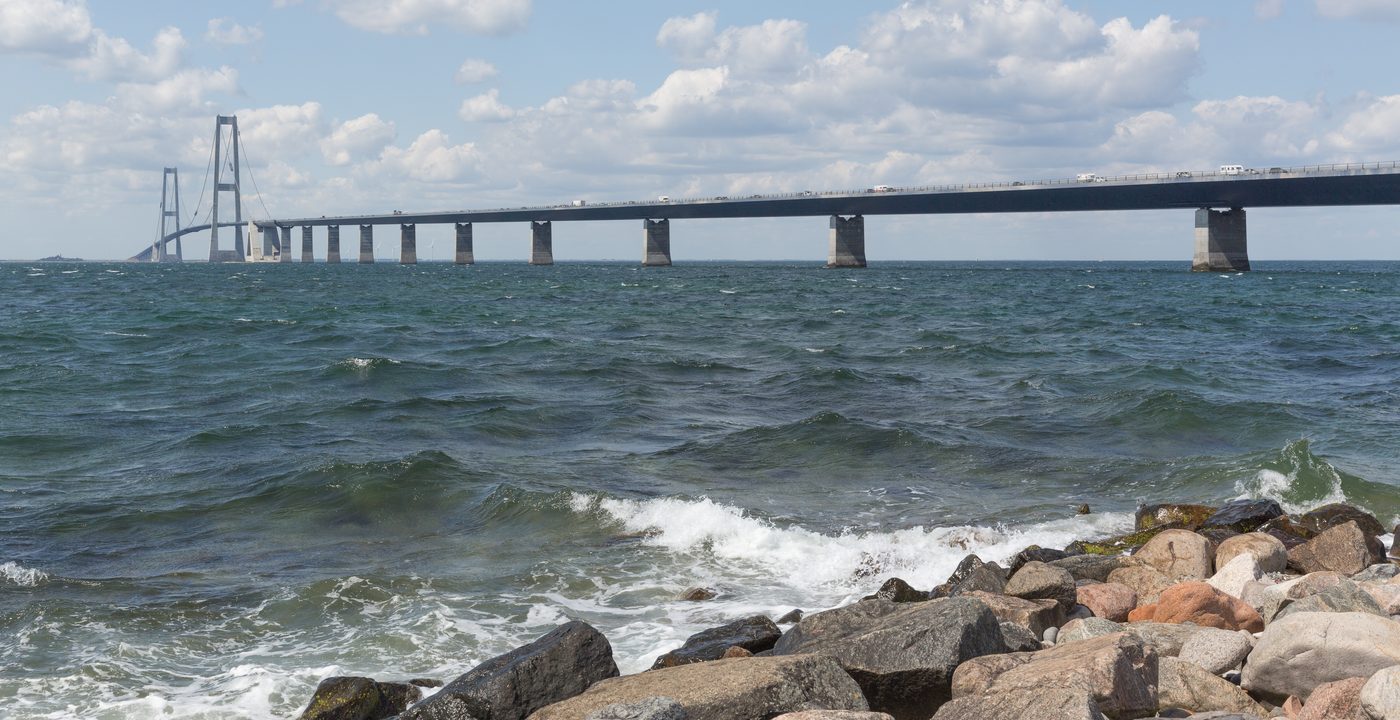
Storebælt high bridge at dusk — the first 18 km of every Copenhagen-to-Adriatic drive we make
Practical · Denmark → Croatia logistics

Bridge or ferry to Croatia — why we drive Storebælt every single time

Three realistic routes from Denmark to the Adriatic. One of them costs less, runs on your schedule, and never strikes. The other two have their moments — for someone else.

By Blazenka & Bo Last updated 2026-05-25 9 min read
Scroll
B&B

Blazenka & Bo

A Danish-Croatian household that has driven the Copenhagen-to-Adriatic route for the past 4+ years. Bo drives a Tesla (since 2023; before that, a Mercedes — diesel then petrol). Blazenka is Croatian, from inland Croatia; she lived in Zagreb for years and has travelled to the coast nearly all her life. Bo handles logistics and toll arithmetic; Blazenka handles where you actually want to stop. The numbers in this piece come from our own ticket history, not a press release.

"The ferry sounds romantic. The bridge is shorter, cheaper, and on your schedule."

Updated 2026-05-25 · Prices verified 2026-05-25

If you're driving from Denmark to Croatia there are three realistic routes: Storebælt + Jutland down through Germany, the Rødby-Puttgarden Scandlines ferry shortcut, or Øresund + Sweden + a ferry to Germany. We pick option one every single time. The reason isn't price — on a cheap-ticket day the ferry can match or beat the bridge. The reason is predictability.

~1,900 km
Copenhagen → Zadar
3 routes
Realistic options
400 DKK
Storebælt, one way
0
Ferries on our route
01 · TL;DR

The short version

Drive Storebælt + Jutland. 400 DKK eastbound, free westbound, no booking, no timer, no missed-ferry penalty. Add Hamburg, Würzburg, Regensburg overnight, Salzburg, Slovenia — and you arrive on the Adriatic with the family still talking to each other. The ferry saves 190 km but costs €111+ walk-on in peak season and locks you to a departure slot. The Sweden route adds 4–5 hours of driving and another fare on top of the Øresund toll. For pure Denmark → Croatia transit, neither alternative is worth what it takes.

02 · The options

The three realistic routes

All three routes come up in questions we get. We drive route 1 ourselves — and it's not for nostalgic reasons.

Our pick

Storebælt + Jutland

No bookingLeave when readyDense charging

Storebælt bridge from Zealand to Funen, down through Jutland, across Padborg into Germany, then A7 south. Flows directly into Regensburg → Salzburg → Slovenia.

One-way car~400 DKK
The shortcut

Rødby → Puttgarden

ScandlinesFixed departure−190 km

Saves roughly 190 km in exchange for a fixed departure slot and a €30–€111 ferry fare per crossing. Cheap only if booked 6+ months ahead.

One-way car€30–111
The detour

Øresund + Sweden

+4–5 hoursTwo faresCharging gaps

Only logical if Sweden is already part of your trip. Otherwise mathematically worse on every axis — two timetables and higher total cost.

Tolls + ferry1,200 DKK+
A Scandlines hybrid ferry crossing the Fehmarn Belt between Rødby and Puttgarden
Scandlines on the Fehmarn Belt. Beautiful crossing — on a day you booked six months ago and arrived on time.
03 · The numbers

2026 cost & time comparison

Numbers verified 2026-05-25 against the official sites. Realistic midpoints for a family car in July or August.

RouteOne-way price (car)CrossingTotal time impactPredictability
Storebælt (our pick)~400 DKK std / ~280 DKK BroBizz15 min0 (reference)Total — leave when you're ready
Rødby → Puttgarden — Scandlines Low Price, booked 6+ months out~€30–5045 min−2 hrs driving, +1 hr ferry slotConditional on arriving on time
Rødby → Puttgarden — walk-on / summer gate price~€111+45 minSame time, ~2× the costSame constraint, worse value
Øresund → Sweden → Trelleborg–Rostock~520 DKK Øresund (~182 ØresundGO) + ~€100–180 ferry10 min + 6 hr ferry+4–5 hrs vs StorebæltLocked to two timetables

Verified 2026-05-25 against storebaelt.dk, scandlines.com and oresundsbron.com. Storebælt is charged eastbound only (Funen → Zealand) — westbound is free, so the toll is essentially a one-way cost on the way home from Croatia.

!

Ferry strike season is summer

Scandinavian ferry operators see industrial action a few times a decade. It almost always hits in summer — peak season. If your accommodation in Croatia is non-refundable and your only route to it is a ferry on a fixed timetable, that's real exposure. The bridge has no labour-relations failure mode.

04 · The argument

Why we never take the ferry

The case against Rødby-Puttgarden isn't the ferry itself. Scandlines runs a good operation. The case is what booking a ferry does to your departure day.

Families don't hit planned departure times

We have a "we leave at 06:30" time. In reality it's 07:00, sometimes 07:15. There's always something — a bag missing, one more bathroom round, a charger left plugged into a wall. None of that matters when you're driving to Storebælt. The car leaves when we are ready. It matters a lot when you have a fixed ferry slot 90 minutes south.

The cheap tickets are gone by the time most families book

That €30–50 Scandlines "Low Price" ticket needs to be booked roughly 6+ months ahead, tied to a specific departure. By the time you're actually planning July or August, those tickets are gone. What's left is the standard fare — around €111 walk-on at the gate. Two crossings at that rate is €220+. Storebælt return is around 400 DKK eastbound only, or 280 DKK with BroBizz. The cost advantage of the ferry evaporates the moment you book at normal summer notice.

The ferry sounds romantic. The bridge is shorter, cheaper, and on your schedule. Blazenka & Bo

The "saved" 90 minutes isn't really saved

Yes, the ferry route cuts about 190 km. But the 45-minute crossing, the ~30 minutes of boarding and unloading, plus the buffer you must budget so you don't miss the departure — that eats most of it. If you arrive 10 minutes late on a busy summer Saturday, you wait an hour for the next sailing, and your "saved" time turns into a deficit. The Jutland route has no such cliff edge. You're late by 30 minutes, you arrive 30 minutes later. Linear, predictable, low-stress.

You can't pause when you actually need to

On a Storebælt + Jutland day, the breaks happen when the kids melt down, when someone is hungry, when the dog is restless. On a ferry day, you push through the meltdown because you have to make the boat. That's a bad way to start a four-week holiday.

Puttgarden in summer chaos

If you do book the ferry, build in a 90-minute buffer for the Puttgarden approach on summer Saturdays. The B207 backs up. The check-in lane backs up. The chargers on board fill in 15 minutes. Arrive 90 minutes before your booked sailing, not 30. It feels excessive in May. It does not feel excessive in late July.

05 · The maths

Why we never drive Sweden

The Sweden route looks tempting on a map — Øresund bridge, smooth Swedish highways, ferry to Germany, done. The maths says otherwise, and it's a question we hear often enough to answer directly: should you drive to Croatia via Sweden? No — here is why.

First, it adds 4–5 hours of total travel compared to the Storebælt-Jutland route. The Øresund crossing itself is fine (520 DKK standard, or ~182 DKK with ØresundGO), but then you're driving 600+ km diagonally through Sweden to reach a ferry port. The Sweden-Germany crossing (Trelleborg-Rostock) is 6+ hours and costs €100–180 for a car — on top of the Øresund toll. Total: roughly DKK 1,200–1,800 in tolls and fares versus 400 DKK for Storebælt.

Second, you skip the natural Slovenia and Salzburg detour. The Jutland-Germany route hands you Regensburg → Salzburg → Slovenia almost for free — beautiful country, easy overnight stops, the Slovenian Alps as a built-in transition into the Mediterranean. The Sweden route dumps you in Rostock and you still have to cross the entirety of Germany before you even see Austria.

The only honest case for the Sweden route is if Sweden is already part of your holiday — you're visiting family in Småland, doing a stop in Stockholm, or you're a Swedish driver to begin with. As pure Denmark → Croatia transport, it makes no sense.

Ferry terminal at Trelleborg in southern Sweden
Trelleborg terminal. Six hours from here to Rostock — plus Øresund and a diagonal drive through Sweden to get here. That's the maths we can't make work.
06 · The conclusion

Why Storebælt + Jutland wins

Four concrete reasons, in order of how much they actually matter to us.

  1. Schedule flexibility. No booking, no timer, no missed-ferry penalty. You leave when you're ready, you stop when you need to, you arrive when you arrive. For a family with kids, a dog and the usual day-one chaos, this is worth more than any cash saving.
  2. Predictable cost. 400 DKK at the gate, or 280 DKK with BroBizz. No "if you book six months ahead" fine print. You know what the bridge will cost. The ferry is a gamble — sometimes cheaper, often more expensive, never predictable in season.
  3. Tesla Supercharger density. The Jutland-Germany corridor is one of the best-charged routes in Europe. We typically charge at Køge or Næstved before Storebælt, top up at Nyborg or Odense after the bridge, hit Padborg right at the border, then Hamburg-Stillhorn on the German side. Every stop is on the natural path. Full charging plan in our Tesla to Croatia guide.
  4. The natural detour. Storebælt + Jutland flows directly into Regensburg → Salzburg → Slovenia → Croatia. Slovenia is genuinely one of the better parts of the whole trip, and skipping it for a ferry shortcut is a bad trade.
Storebælt high bridge in low evening light
Storebælt at dusk. The toll feels brutal the first time. The alternative is a ferry slot you might miss.
07 · The exceptions

When the ferry actually makes sense

Rødby-Puttgarden isn't wrong. It just isn't right for us. Take the ferry if:

Compare current ferry prices on Direct Ferries before committing — occasionally the maths genuinely works out, especially in shoulder season.

The Helsingør-Helsingborg case (sub-variant)

Some readers ask about the short Helsingør-Helsingborg ferry (20-minute crossing) as a Sweden-route opener. It exists, it's cheap, it runs every 15 minutes — but it lands you in Helsingborg, which is still 200+ km of Swedish driving north of the Trelleborg-Rostock departure. Use it if you're going to Stockholm. Don't use it as a shortcut to Croatia.

Rødbyhavn ferry harbour on Lolland
Rødbyhavn. Lovely on the right day. The right day is one you booked in February.
Storebælt high bridge — the start of every Copenhagen-to-Croatia drive
Sister site

Storebælt & Øresund — the 2026 toll guide

Every Danish bridge, every fare class, every BroBizz discount. The technical Denmark layer of this exact trip lives on our sister site.

Read on Road Trip Denmark

"Remember — you're on vacation."

Day one is allowed to start late. Pick the route that lets it.

08 · Questions

FAQ

Storebælt + Jutland + straight down through Germany via Hamburg, Würzburg, Regensburg, Salzburg and Slovenia. Roughly 1,900 km to Zadar — two driving days for us. The Sweden route adds 4–5 hours. The Rødby-Puttgarden ferry only saves time on paper if you hit your booked departure on the minute — which a family on day one of holiday rarely does.
On distance, yes — about 190 km less driving. In practice, only if you have a pre-booked cheap ticket, arrive on time, and don't mind the 45-minute crossing slot plus 30 minutes of boarding/unloading buffer. Walk-on gate prices of €111+ wipe out most of the time advantage, and a missed departure on a busy summer Saturday means waiting an hour for the next sailing.
They exist. Hirtshals–Bergen plus Norway–Sweden–Germany is a long detour. Ancona–Split skips the Slovenia stretch but typically costs €200–300 for car + cabin, and most people sleep poorly. Neither makes sense as a regular Denmark-to-Croatia option.
Only makes sense if Sweden is already part of your trip — for instance, you're visiting Stockholm first. As pure transit to Croatia it adds 4–5 hours and costs Øresund (~520 DKK standard or ~182 DKK with ØresundGO) plus a Sweden-Germany ferry (~€100–180) instead of just Storebælt (~400 DKK).
Around 400 DKK standard, 280 DKK with BroBizz, per eastbound crossing. There's a 50% weekend discount Friday noon to Monday 06:00. Charged eastbound only (Funen → Zealand) — westbound (Zealand → Funen) is free, so the toll is essentially a one-way cost on the way home. Verify on storebaelt.dk.
Never on the way to Croatia. We're a family that always runs 20–30 minutes late on departure day. Ferry schedules plus family reality equals stress. If you're a household that hits planned departure times reliably, the Scandlines ferry can absolutely work for you. It just doesn't work for us.
The Jutland–Germany corridor has dense Supercharger coverage — Køge, Nyborg, Odense, Padborg, then straight down the A7. The Sweden–Trelleborg–Rostock–Germany route has more gaps once you're south of Rostock. For our Tesla setup, Jutland is the lower-stress charging plan. See the full Tesla to Croatia guide.
Scandinavian ferry operators see industrial action a few times a decade. When it happens, it hits summer specifically — peak season. The bridge has no such failure mode. That asymmetry matters for a family booking non-refundable holiday accommodation.