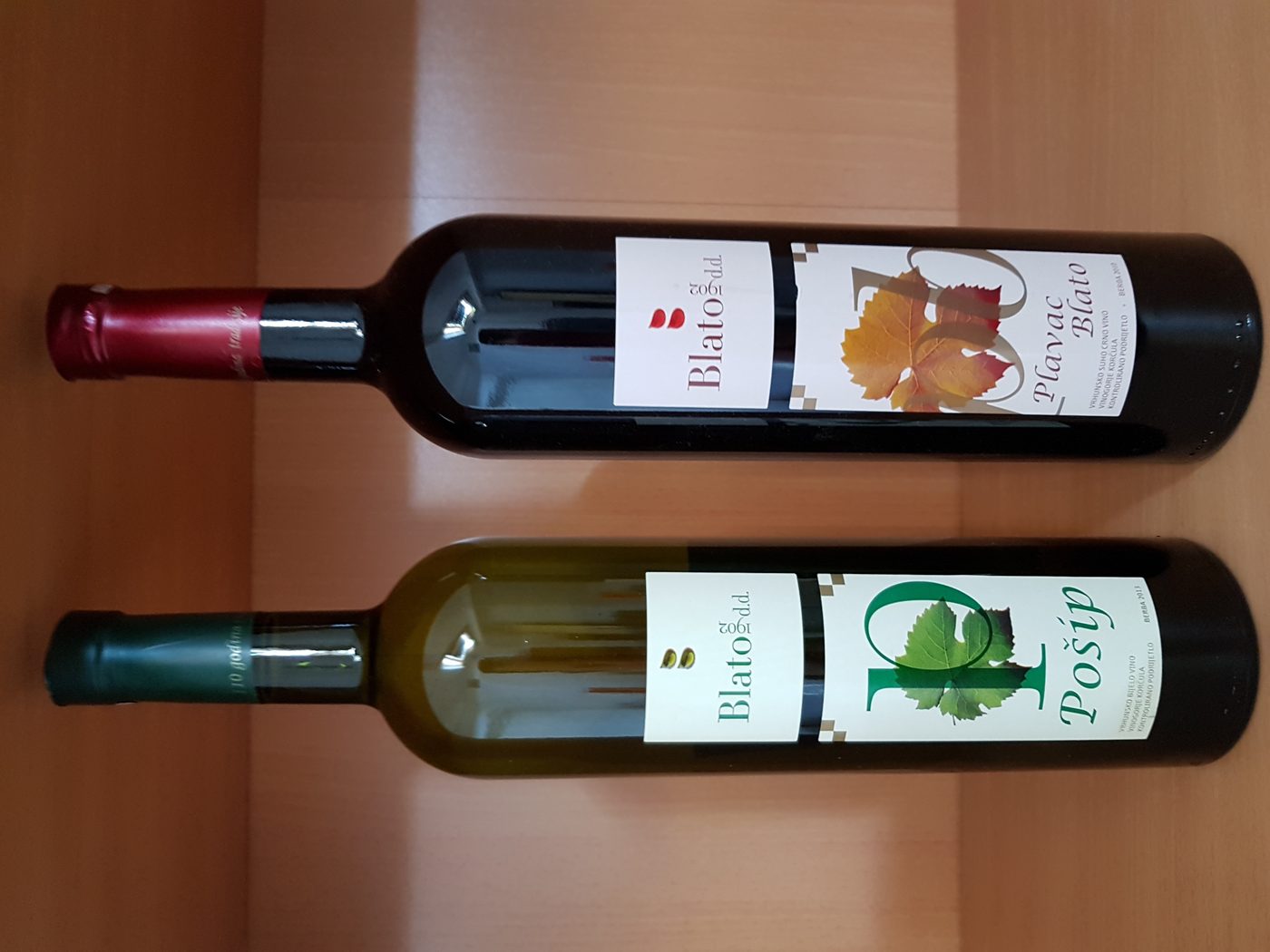
Most international visitors leave Croatia having tasted exactly one Croatian wine: the Pošip the waiter recommended with the grilled fish. That is a shame. 130+ indigenous grapes, 2,500 years of winemaking, and the actual genetic home of Zinfandel — written with a local who knows the producers.
Croatia has been making wine for 2,500 years, has more than 130 indigenous grape varieties, and is the genetic origin of Zinfandel. This guide is the version we wish someone had given us before our first wine trip — aimed at curious drinkers who want more than the house white.
The Greeks planted vines on Hvar and Vis in the 4th century BC. The Romans expanded the vineyards across what is now Istria and Dalmatia and shipped the wine back to imperial tables. The Habsburgs took over in the north and brought in Central European varieties and oak-cellar traditions. Through all of it — empires, wars, phylloxera, communism, the Homeland War of the 1990s — small Croatian families kept making wine. Today, roughly 90 percent of Croatian wine is still drunk inside Croatia. That is why you have not heard of it.
Two things make the scene genuinely worth your attention. First, more than 130 indigenous grape varieties most of the world has never tasted — varieties that exist nowhere else and that produce wines you literally cannot get at home. Second, Croatia is the genetic origin of Zinfandel. DNA work in the early 2000s confirmed that California Zinfandel and Italian Primitivo are both the same vine as an old Dalmatian grape called Crljenak Kaštelanski or Tribidrag. A handful of vines survived in the Kaštela area near Split; several producers now make limited bottlings that let you drink Zinfandel where it actually comes from.
Geographically the country splits into two big halves: Continental Croatia in the north (cooler, Central European in feel, oak-aged whites and lighter reds) and Coastal Croatia along the Adriatic (Mediterranean climate, old vines, big reds, mineral whites). Inside those two halves sit four wine regions worth planning a trip around.
If you are choosing where to spend your wine days, the answer depends on where you fly into and what you want on the plate. Pelješac is the easiest from Dubrovnik. Istria is the obvious add-on if you are coming via Slovenia or Venice. Slavonia is the one almost nobody does — and the one that pays the curious traveller back the most.

Old bush vines on dry-stone terraces. Dingač and Postup are the most concentrated. Combine with Ston oysters in a single afternoon from Dubrovnik.

The peninsula across the bay from Venice — and it tastes like it. Hand-rolled fuži, white truffle, and a winemaking style that prizes elegance over power.

Continental climate, long autumns, Slavonian oak from the same forest as the barrels. Cellars under Ilok poured for European royalty. €5–€8 buys serious quality.
July and August on Pelješac and in Istria are glorious for swimming but not for wine — producers are slammed with walk-in tour buses, tastings get rushed, and the heat flattens your palate by the third glass. May, early June and the whole of September through mid-November are the windows we keep coming back to. Berba (harvest, late September to mid-October) is the most atmospheric of all — fermenting must perfumes the villages and every host has a story — but call ahead because the producers are working twelve-hour days.
Hot, dry, stony, and full of old vines. Some of the Plavac Mali bush vines on Hvar and Pelješac are over 100 years old, grown without irrigation on dry-stone terraces that look impossible until you realise they have been there since before the Austro-Hungarians arrived.
The headline red is Plavac Mali — big, dark, oak-aged, the king of Dalmatia. It is the offspring of Crljenak Kaštelanski (Tribidrag / Zinfandel) and Dobričić, which makes it Zinfandel's direct descendant. Pelješac and Hvar are its heartland, and the steepest vineyards on the south side of Pelješac — Dingač and Postup — produce the most concentrated versions. Dingač was Croatia's first protected appellation, designated in 1961 for vines on slopes so steep the grapes were historically lowered to the road by donkey.
The headline whites come from the island of Korčula across the channel: Pošip (full-bodied, ageable, the best examples easily worth €25–€40 a bottle) and the very rare Grk, grown on a single sandy patch near Lumbarda and almost impossible to find outside Croatia. From the island of Krk further north: Žlahtina — light, refreshing, ideal with grilled fish.
Producers to plan a tasting day around: Bibich in the inland Dalmatian hinterland, Korta Katarina on Pelješac, and the legendary Frano Miloš, whose unfiltered Stagnum spends years in oak before it ever sees a bottle.

Drink a Frano Miloš Stagnum at the kitchen table where it was made, with the man who decided when it was ready. You will not forget the wine, and you will not forget the afternoon.Blazenka
The peninsula directly across the bay from Venice — and it tastes like it. Italian influence runs through everything: olive oil, truffles, hand-rolled pasta, and a style of winemaking that prizes elegance over power.
The signature white is Malvazija Istarska — mineral, peach-skinned, faintly salty, made in both fresh stainless-steel versions and richer skin-contact "amber" styles. The signature red is Teran, an earthy, food-friendly variety from the karst soils inland. The pairing of Malvazija with shaved white truffle on hand-rolled fuži pasta is one of the great regional dishes of Europe, and the Motovun area — hilltop medieval town, white-truffle forests, a cluster of small wineries within a twenty-minute drive — is the natural base for tasting.
Producers worth visiting: Kabola (organic, amphora-aged Malvazija), Coronica (benchmark Teran), Kozlović, and Matošević.
The flat eastern part of the country, running toward the Hungarian and Serbian borders. Continental climate — hot summers, cold winters, a long autumn that ripens whites slowly. The part Blazenka knows best.
Oak from the Slavonian forest is exported all over Europe to age top wines; here it stays local, and the whites and lighter reds are matured in barrels from forests a few kilometres away. The grape to know is Graševina (Welschriesling) — Croatia's most-planted white. Light, citrus-driven, easy on the table, and shockingly cheap for the quality. Alongside it: Frankovka (Blaufränkisch) for fresh reds, and Traminac (Gewürztraminer) for aromatic whites that historically poured at Habsburg court tables.
The most atmospheric sub-region is around Ilok, a fortified medieval town perched above the Danube. The cellars under the town date back centuries and produced wine for European royalty. Other producers worth a stop: Iločki Podrumi, Krauthaker, and Kutjevo — one of the oldest continuously operating wine cellars in Europe, founded in 1232.
Forty minutes west of Zagreb the land rises into the Plešivica hills. The altitude keeps the climate cool — and the cool climate makes this Croatia's quiet capital of sparkling wine.
Traditional-method bubbles age for years on the lees in small family cellars; the quality at the €20–€35 price point genuinely rivals entry-level Champagne. Still wines here are equally good but harder to find abroad: Šipon (Furmint — rich, mineral, ageable, the same grape Hungary uses for Tokaji) and Pinot Crni (Pinot Noir) in elegant cool-climate styles.
The pleasure of Plešivica is the scale: tiny producers, a dozen tasting rooms inside a twenty-kilometre stretch, almost no foreign visitors. Tomac pioneered Croatian sparkling and still makes the regional benchmark; Šember and Korak are the other names to add to a tasting day.
If you remember nothing else from this guide, remember these names — every Croatian wine list will lead with them.
Whites
Reds
The rarest pilgrimage is Tribidrag / Crljenak Kaštelanski — the actual Zinfandel grape, made in tiny quantities by a handful of Dalmatian producers. The vine nearly died out; a handful survived around Kaštela and on the islands. Tasting it where it originally came from is the whole trip.
A konoba is the closest thing the Croatian coast has to a French bistrot — a small family-run restaurant where the wine list is the producer down the road and the cook is usually somebody's mother.
The trick is to ignore the half-page of international wines on the back of the menu and ask one specific question: "What is the local wine here, and who makes it?" Nine times out of ten you will get poured a glass from a producer whose label never sees an export box. Ask for the second wine — the one they drink themselves after service — and you will get the actual answer.
On the waterfront promenade in Split, Hvar Town or Dubrovnik a glass of generic Plavac Mali runs €8–€12 and a bottle €40–€60 for wine you can buy at the supermarket for €9. Walk three streets inland to a konoba and the same glass is €4–€6, the bottle €18–€25, and the wine is usually better — small producer, often a friend of the owner. The rule is consistent across every Croatian coastal town: cross one street away from the sea-view and the price drops by a third while the quality goes up.
Tasting culture at the wineries themselves sits halfway between California and France: more formal than the West Coast, less than Burgundy. Pours are smaller and the producer often pours personally — expect a 45–60 minute visit. Spitting is not common at small producers and they will sometimes look slightly hurt if you do, but you should anyway if you are driving.

Four itinerary anchors — one per region, each self-contained as a single day.
Pelješac peninsula from Dubrovnik. The most famous, the most accessible, the easiest first wine trip. 50 km long, an hour's drive from the old town, Plavac Mali everywhere. Stop at Korta Katarina, Matuško and Grgić Vina — founded by Mike Grgich, the Croatian-American who beat the French at the 1976 Paris tasting — and combine with oyster tasting at Ston. Browse Pelješac wine tours on GetYourGuide — expect €80–€120 per person for a guided day with 3–4 wineries and lunch.
Istria wine and white-truffle tour. The classic combination. Late September to January is white-truffle season around Motovun; tours pair tastings at two or three wineries with a truffle lunch. Around €100–€150 per person. Compare Istria wine and truffle tours on GetYourGuide.
Slavonia wine cellar visit. Harder to access, less commercial, more rewarding. The Ilok cellars beneath the medieval town, paired with a plate of Slavonian kulen, fresh bread and aged sheep cheese, is the kind of wine afternoon that does not exist on any tour-bus itinerary. You will mostly need a rental car and a phone call ahead.
Plešivica day trip from Zagreb. 40 minutes west of the capital. Four to six small producers tightly clustered, a sparkling-wine tradition that surprises every first-time visitor, and a couple of village inns for lunch. Easy as a self-drive day, easier with a hired driver from Zagreb.
Pelješac is the easiest first wine day. Korčula sits across the channel and gives you Pošip and Grk on the same island. Our Dalmatian-islands guide tells you which island fits your trip — and which to skip if your time is short.
Read the Dalmatian islands guideNot every wine day needs a vineyard. Croatia's wine bars in the four main cities are excellent and stock producers that are hard to visit in person.
Zagreb: Bornstein — vaulted brick cellar under the cathedral, 200+ Croatian wines, the best by-the-glass list in the country. Vinoteka Bornstein is the family's retail arm next door. Wine Bar Cingrija focuses on Pelješac and Dalmatia.
Split: Paradox — wine bar plus restaurant with a deep Croatian list and knowledgeable staff. Bokeria for natural wines. Vinoteka Terra for retail with a tasting bar.
Dubrovnik: D'Vino Wine Bar in the old town — touristy, yes, but a serious Croatian selection and flights that let you taste five regions in an hour. Razonoda is the quieter alternative.
Pula (Istria): Vinotegra for an Istria-focused list. Konoba Batelina in the nearby fishing village of Banjole is one of Croatia's best seafood restaurants and the wine pairings are flawless — book well ahead.
The wine logic only makes sense once you have the food logic. These are the regional marriages that repeat themselves all the way down the coast.
For more on the four regional kitchens these wines were built around, read our Croatian food guide — coastal, Istrian, continental and Slavonian cooking are genuinely different.
The practical layer — so a wine day becomes a good day instead of a logistical exercise.
For accommodation in the wine regions:
"Three wineries, one long lunch."
If you have to choose between adding a fourth producer or sitting for another two hours at the konoba where lunch is going well, sit. That afternoon is what you flew here for.