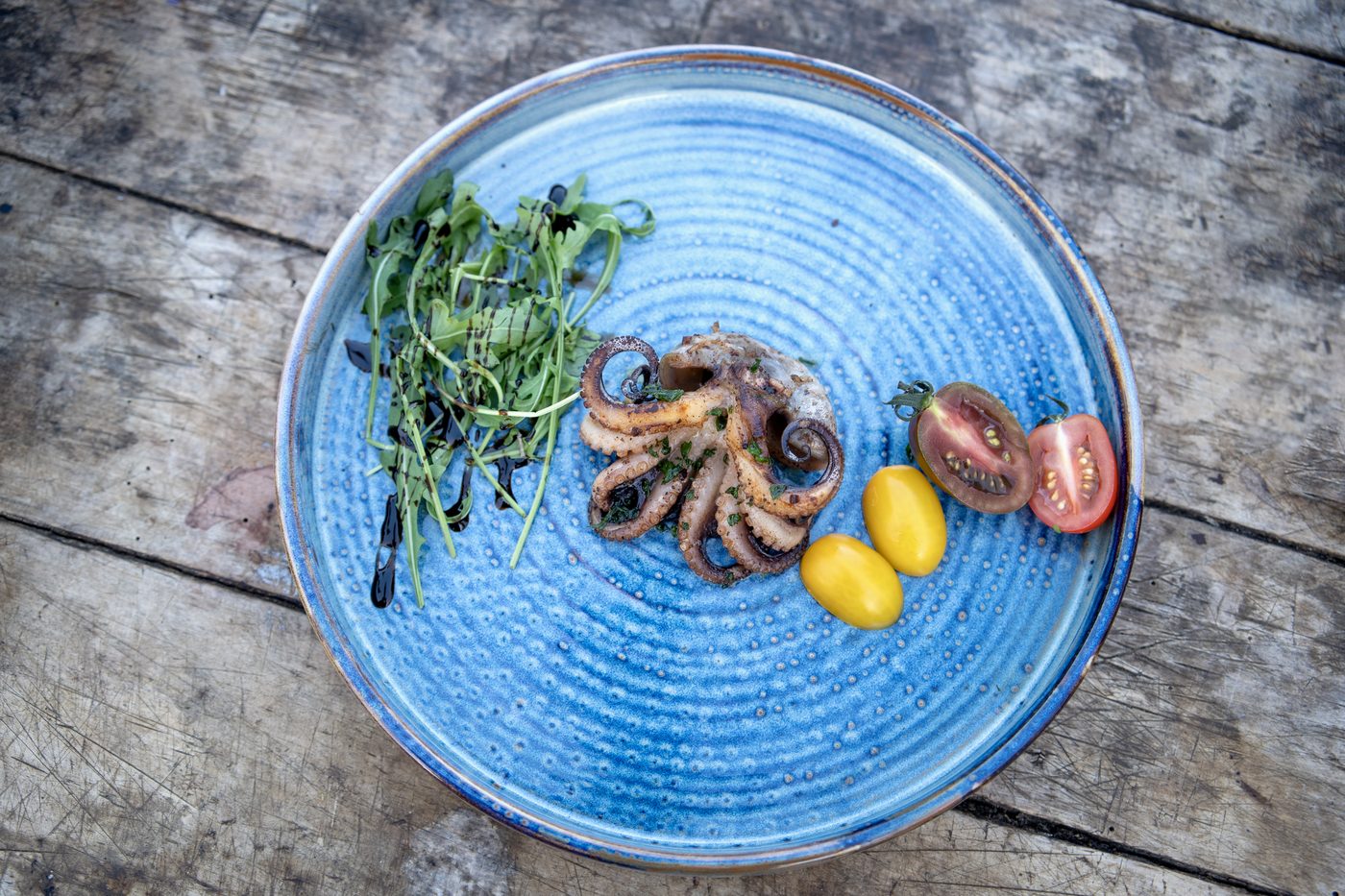
What to order on the Dalmatian coast, in Istria, in Zagreb, on the Slavonian plains — and what to walk past on the waterfront. Written by a Croatian who grew up cooking it.
Most of what tourists eat in Croatia is not Croatian food. It is "Mediterranean tourist food" — pizza, pasta, a grilled fish fillet — served on a waterfront promenade for €25 a plate. Real Croatian food is something else entirely, and it is not one cuisine. It is four very different regional kitchens pretending to be one country.
Croatia is shaped like a boomerang wrapped around Bosnia, and the food maps onto the four corners of that shape. Dalmatian coastal cooking, Istrian Italian-fusion, Continental Austro-Hungarian, and Slavonian paprika-driven Pannonian. They share a flag and almost nothing else.

Pure Mediterranean: olive oil, fish, vegetables, lemon. Peka is the signature dish — meat under an iron bell for three hours. Pošip and Plavac Mali from the vineyards behind.

Italian-influenced to the point of fusion. The defining ingredient is the truffle — white and black, from the Motovun forests. Istrian olive oils win world prizes every year.

Austro-Hungarian inheritance shows in everything: schnitzels, strudel, dumplings. Štrukli (filled cheese pastry) is the classic. Cake culture is real. Heavier than the coast.

Croatia's paprika capital. Fiš paprikaš is mandatory. Kulen is the smoked paprika sausage unlike anything else. Graševina from Ilok is a revelation.
The single most useful Croatian food tip we can give you: call the konoba a day in advance and ask them to put a peka on for tomorrow night. Specify lamb, veal, or octopus. The meat needs three hours under coals — it cannot be cooked on demand. Most konobas need 24 hours' notice; some accept four hours if you call early in the morning. The waiter will respect you immediately.
Three dishes carry coastal Croatia on their backs. If you eat well, you will meet all three — plus a few from inland you did not know you were missing.
Dishes that define the country


If a konoba on the coast has an English menu and TripAdvisor decals in the window, walk past. The real one is fifty metres further inland and looks half-shut.Blazenka

Pure Mediterranean: olive oil, fish, vegetables, lemon, wine, very little paprika, very little heavy meat. Centuries of Venetian trade left their fingerprints — many techniques are Italian-adjacent, but the soul is Dalmatian.
If a coastal restaurant has a laminated photo menu with English/German/Italian translations and a "pizza/pasta/fish plate" structure, the food is not for you. The English menu is a warning. Walk one or two streets inland and look for a place with no printed menu at all — the waiter recites today's catch. That is the konoba you came for. Yes, it looks empty at 19:00. They open at 20:00 and locals arrive at 20:30.
The heart-shaped peninsula in the northwest. Italian-influenced to the point of fusion: pasta, risotto and gnocchi are everyday. The defining ingredient is the truffle — both white and black, with serious foraging traditions in the Motovun forest.

The inland north, including the capital and the Zagorje hills. Austro-Hungarian inheritance shows in everything: schnitzels, strudel, dumplings, paprika in moderation, lots of pork and dairy, river fish from the Sava.
The flat eastern part of the country, bordering Hungary and Serbia. Croatia's paprika capital. River fish (carp, catfish, pike-perch from the Sava and Drava) is the protein. Spice level here is real — the only Croatian region that genuinely cooks hot.
Every Croatian town has bakeries every three or four blocks. They are the cheapest, fastest, most local lunch in the country. Look for burek (filled pastry — meat, cheese, spinach, sometimes apple), sirnica (cheese roll) and pizza slices. €3–5 fills you up. Most are open from 06:00.

Coffee in Croatia is social currency, not caffeine delivery. A cup is meant to take an hour or two, on an outdoor terrace, with friends. Order bijela kava (white coffee, the default), espreso or makijato. Nobody will rush you. In summer the café terraces of Split, Zagreb and Rijeka are the actual living room of the city.
For self-catering or a beach picnic: pršut, a wedge of Paški sir, fresh tomatoes, a bottle of local olive oil, a baguette and a bottle of local wine. Summer produce — peaches, figs, melons, apricots, tomatoes — is dramatically better than what you buy at home. Total spend for a picnic for two: €10–15. Better still, hit a city market — Dolac in Zagreb, the Pazar in Split.

The concrete map — what to tell the waiter when you sit down.
Do not order pasta or pizza — that is the lazy tourist offering and it will be average. Do order: grilled whole fish, peka (call ahead by 24 hours), octopus salad, black risotto, brudet, buzara. Drink Pošip or Plavac Mali. If a coastal restaurant cannot make peka and does not have fresh whole fish for the day, you are in the wrong restaurant. More on which island suits which kind of trip in our guide to the Dalmatian islands.
Do order: fuži with truffles, boškarin steak, anything truffle-based in autumn. Pizza is excellent here — one of the few places where ordering pizza in Croatia is the smart move. Drink Malvazija (white) or Teran (red, deeply rustic). Buy a bottle of Istrian olive oil to take home.
Do order: štrukli, sarma, schnitzel (yes, real ones), blood sausage, beef broth with noodles. For dessert: kremšnita or strudel. Drink Graševina (Welschriesling) — the easy continental white. We cover the full wine landscape in our wine regions guide.
Do order: fiš paprikaš (mandatory), kulen with fresh bread, šećerma, čobanac. Drink Graševina from Ilok or Kutjevo — these are some of the best whites in the country. Finish with a homemade rakija from whichever fruit was in season last year.
Where to eat all of this for real. The honest island-by-island guide — Hvar, Brač, Korčula, Vis — and which one matches what you actually want from a week on the coast.
Read on
Vegetarian — coastal Croatia is easy: grilled vegetables, pasta, risotto, blitva, cheese plates. Inland is harder; sarma usually contains meat, manestra is usually safe. "Vegetarijanski" is understood everywhere. Pizza is always available.
Vegan — harder than vegetarian. Zagreb and Split now have vegan-friendly restaurants and the word is "vegansko". Self-catering from a market is the most reliable strategy.
Gluten-free — "bez glutena" is understood in cities but limited in village konobas. Larger restaurants in Zagreb, Split and Dubrovnik now stock gluten-free pasta and bread.
Three traps we see visitors fall into: "Croatian salad" — it is lettuce and tomato, nothing more. "Mixed grill plate" at tourist restaurants — frozen meat from an industrial kitchen, not a local grilled dish. Pizza in Dalmatia — average. Save your pizza meal for Istria, where it is genuinely excellent.
Coastal tourist areas: casual lunch €15–25, mid-range dinner €35–55, fine dining €80–150, coffee €2–3. Inland and non-touristy towns: casual lunch €10–15, mid-range dinner €20–35, coffee €1.50–2.50. Water is usually free if you ask; bottled water and bread baskets are often charged separately.
For organised food experiences, GetYourGuide aggregates most of the licensed operators. Browse Croatia food tours on GetYourGuide — useful especially on the first day in a new city when you want a local to point at things and explain them.
"Remember — you're on holiday."
It is not a checklist of dishes. Order one peka, walk one market, take one rakija from someone's grandfather — and you have already eaten more Croatia than most visitors.